
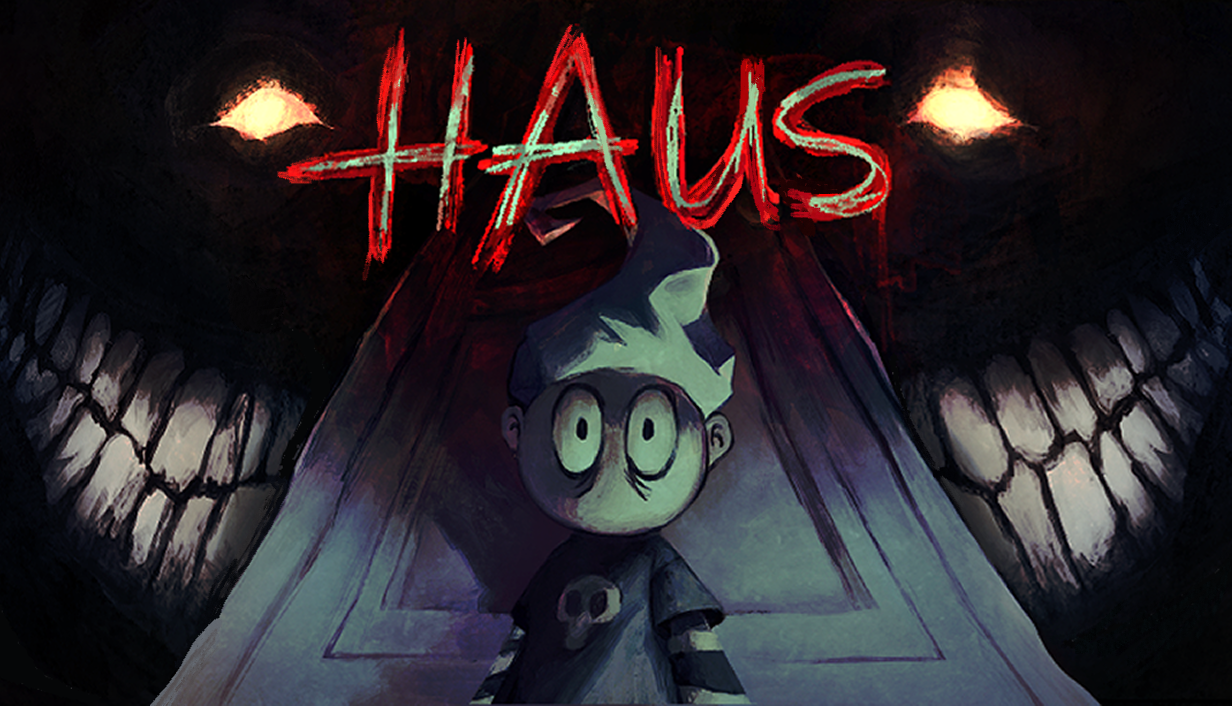


HAUS is a classic fixed camera survival horror experience where you play as Lawrence, a small child trying to survive the night inside his own home. “Mom? Dad?” Little Lawrence wakes up alone in the middle of the night. His house should feel warm and safe, but it does not. The silence feels wrong and the shadows feel alive. Grotesque figures lurk in the hallways, slowly transforming a familiar home into a place where safety no longer exists.
There is no combat and no power fantasy. Your goal is simple but terrifying. Move through the house, evade what hunts you, and uncover the truth about what is happening, where your parents are, and why this nightmare is unfolding around you.
FIXED CAMERAS AND SURVIVAL HORROR ROOTS IN HAUS
The fixed camera approach is one of HAUS strongest creative pillars. It immediately establishes a sense of unease and control loss that modern free camera horror often lacks. Every angle feels intentional, hiding information just out of view and forcing the player to move carefully. Exploration becomes slow and thoughtful, echoing the structure of early survival horror games where tension came from what you could not see.


The inventory system feels familiar and intuitive, reinforcing the classic survival horror identity. Keys, environmental puzzles, and room to room progression encourage careful exploration rather than rushing forward. The house itself becomes a character, gradually revealing its secrets through layout and atmosphere rather than exposition.
LAWRENCE FEAR AS A CORE MECHANIC
HAUS replaces traditional health systems with fear. Lawrence is a child, and the game never lets you forget that. When hiding from enemies, fear builds up and Lawrence can panic. It becomes your responsibility to keep him calm through a rhythmic skill check. Hiding alone is not enough. You must actively manage his emotional state to survive.


The more frightened Lawrence becomes, the harder it is to keep him quiet. Inspecting disturbing objects, making mistakes, or encountering horrific imagery raises his fear level. This turns every decision into a risk and makes even small interactions feel dangerous. Fear is not just atmosphere here. It is the core mechanic driving tension.
HAUS VISUAL IDENTITY AND GOTHIC INFLUENCE
The visual presentation plays a massive role in how HAUS feels. The game embraces a twisted gothic aesthetic inspired by Tim Burton and American McGee, filtered through retro low poly visuals that feel deliberately restrained. The result is a surreal storybook nightmare that feels unsettling rather than flashy.


Minimalism works in the game’s favor. Environments feel sparse but intentional, allowing lighting, sound, and shadow to carry the horror. The longer you play, the more the art direction becomes inseparable from the emotional experience. It feels like stepping into a distorted childhood fairytale.
HAND PAINTED CINEMATICS AND HORROR PRESENTATION
Key narrative moments unfold through hand painted 2D cinematics inspired by analog horror series like The Walten Files. These sequences punctuate the experience with disturbing imagery that lingers in your mind. Death animations are unique and visceral, reinforcing the idea that every mistake has consequences.
These moments never feel excessive. Instead, they add weight to the story and strengthen the emotional impact of Lawrence’s situation. The contrast between the simple environments and the intense cinematic moments enhances the overall sense of dread.
THE CLOWN STALKER
Enemy design in HAUS is memorable, but the Clown stalker stands out as especially effective. For players with clown phobias, this encounter hits directly at a deeply personal fear. The Clown feels oppressive and relentless, crossing the line just enough to be overwhelming in a good way.


It never feels cheap or unfair. Instead, it uses sound, pacing, and limited visibility to create genuine psychological tension. This is horror that understands discomfort and uses it with purpose.
EXPLORATION AND ATMOSPHERE
Exploration is slow, tense, and intentional. Every room feels like it holds either a clue or a threat. Environmental storytelling encourages players to piece together events organically, allowing imagination to fill in the gaps. The house slowly reveals its secrets without ever fully explaining itself.


This approach strongly recalls early survival horror design while maintaining a unique identity. The minimalistic structure keeps focus on fear, vulnerability, and atmosphere rather than spectacle.
THE TEAM BEHIND HAUS
HAUS is the work of a small three person independent team, and that focus shows in every aspect of the game. Agustín Hilal from Bloody Carnival handled game design and programming. Guillermina Reimers from Sei Lov led art direction and served as the main artist. Diego Kantabian was responsible for music and sound design, delivering an audio landscape that reinforces tension and emotional weight throughout the experience.
FINAL THOUGHTS
HAUS is shaping up to be a thoughtful and emotionally driven survival horror experience. Its fixed camera design, fear based mechanics, and gothic visual identity work together to create something that feels both nostalgic and distinct. The minimalist approach grows on you the longer you play, eventually becoming one of the game’s greatest strengths.

This is a project that clearly understands the aspects of survival horror at its core and respects the power of restraint but decided to try something that feels fresh! . HAUS does not rely on excess to scare you. It relies on vulnerability, atmosphere, and fear. I am genuinely excited and looking forward to its full release.
Get it on:
Steam: HAUS on Steam