
Psychological horror has never been a fixed formula. Since the genre found its footing decades ago crystallized by titles like Silent Hill it has continued to evolve away from monsters, ammunition, and mechanical survival toward something far more unstable: the horror of the mind.
In our previous feature, The Roots of Psychological Horror, we explored how this subgenre emerged from classic survival horror and gradually turned inward. Yet, that evolution has never been universally embraced. Many players argue that horror should remain escapist, that trauma driven narratives are too close to real-life suffering to be enjoyable.
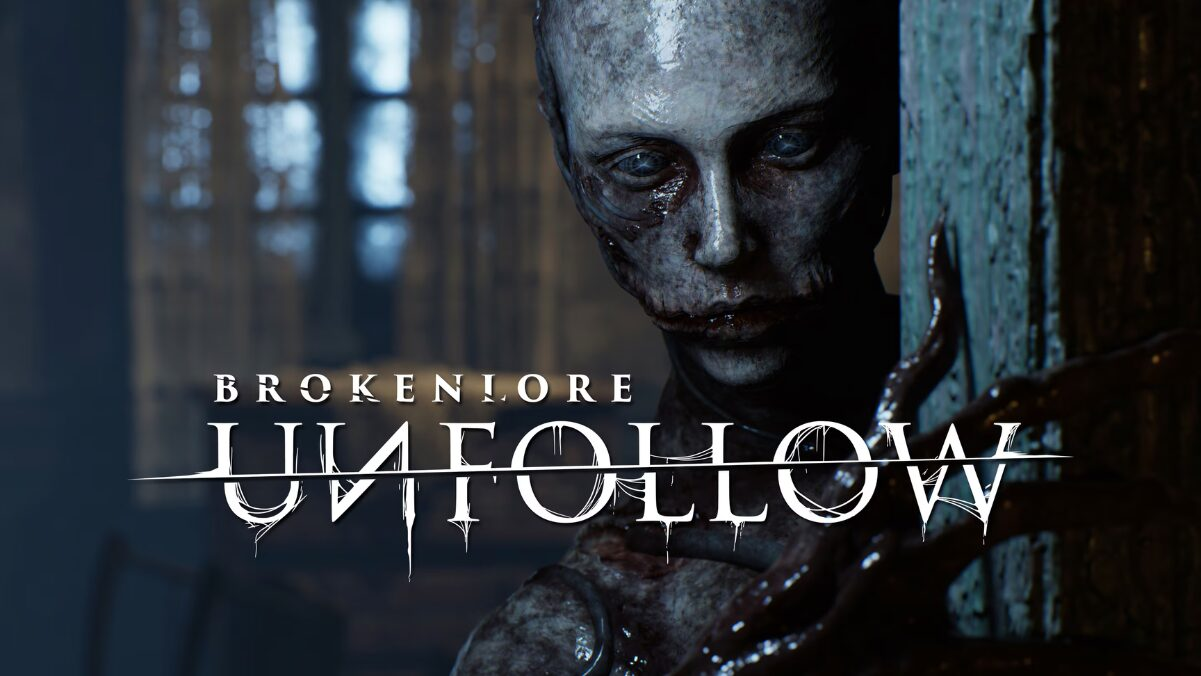
BrokenLore: UNFOLLOW exists precisely at that point of friction.
Rather than avoiding the discomfort, it confronts it directly using social media anxiety, parasocial relationships, and emotional exhaustion as its core material. It does not simply aim to frighten; it reflects. And that distinction defines the entire experience.
Story : Psychological Dominance Over Horror
UNFOLLOW follows Anne, a young woman shaped by bullying, fractured parental relationships, and an increasingly toxic relationship with online validation. Early on, the narrative feels grounded, almost familiar. The horror is contextualized through recognizable spaces and situations.


Then, something shifts.
At a certain point, the psychological dimension overtakes traditional horror structure. Fear gives way to mental saturation, and clarity begins to erode. For some psychological horror fans, this can be disorienting. The pacing may feel uneven. Narrative threads loosen. You may feel lost.
From a design perspective, this is seems to be intentional.


What the game depicts is not escalation, but psychological decompensation a breakdown where internal processes overwhelm external stimuli. The horror doesn’t disappear; it becomes internalized. UNFOLLOW stops asking what is happening and starts asking how does it feel to exist in this state?
This design choice aligns directly with Serafini’s own intent. In our interview, he explained that UNFOLLOW was born from observing influencer culture firsthand seeing how confidence, validation, and success coexist with anxiety, insecurity, and emotional fragility. The result is a narrative that fractures not because it loses focus, but because focus itself becomes impossible.
Gameplay : Symbolic Interaction Over Mechanical Mastery
Mechanically, UNFOLLOW remains minimalistic. Exploration, interaction, and flight define most of the experience. As the psychological aspect intensifies, gameplay becomes increasingly subordinate to meaning.


This mirrors cognitive overload, a psychological state where stress suppresses complex decision-making. Rather than empowering the player, the game constrains them forcing reactive movement, repetition, and exhaustion.


Serafini reinforced this approach during our Interview: Exploring the Psychology of BrokenLore: UNFOLLOW, where he explained that mechanics are designed to operate on multiple levels. Feeding a creature tied to Anne’s eating disorder is not merely an action; it is symbolic participation. Later, enabling notifications that affect gameplay mirrors how social media intrudes into mental space.
Gameplay here is not about mastery. It is about embodied metaphor.
Visuals : Dissociation, Surrealism, and Doubt
Visually, UNFOLLOW transitions from grounded environments into increasingly abstract spaces. This progression reflects derealization, where reality feels artificial or untrustworthy.


The later liminal and surreal environments may feel abrupt to players expecting gradual narrative escalation. But psychologically, they represent a mind no longer anchored to linear perception.
Serafini described his fascination with curiosity and hidden layers of reality, a philosophy reflected in the game’s psychedelic and symbolic art direction. The environments are not meant to be decoded immediately; they are meant to unsettle, provoke doubt, and resist certainty.
Soundtrack : Emotional Continuity
As structure loosens, audio becomes the experience’s emotional spine. Sound design anticipates fear, sustains tension, and often replaces visual clarity as the primary guide.
Serafini emphasized how personal music is to the BrokenLore series, with sound functioning as narrative rather than background. That intention is felt throughout UNFOLLOW. Audio grounds the player emotionally even as visual and narrative cohesion dissolves.
Contribution to Psychological Horror : Emotional Endurance
UNFOLLOW contributes to psychological horror by allowing psychology to dominate horror itself. At times, fear gives way to introspection. Shock yields to discomfort. The experience becomes less about terror and more about emotional endurance.


This approach may alienate players seeking consistent pacing or conventional payoff. But it reinforces a core truth of psychological horror: trauma does not resolve neatly, and understanding often comes after the experience not during it.
As Serafini noted, there is no correct interpretation. Creatures embody emotions rather than threats. Symbolism is intentionally ambiguous. The goal is not to dictate meaning, but to invite reflection.
Verdict : A Horror That Lingers and Invites to Reflect.


BrokenLore: UNFOLLOW is recommended for fans of psychological horror who are willing to move beyond coherent storytelling and linear structure players who embrace discomfort, ambiguity, and reflection long after the game ends. If you don’t mind what the internet calls these days Walking Simulators with Psychological Tension and deep messages, this game is for you.
From a traditional gaming perspective, it may feel like the experience loses its way halfway through. But does it? Or does it simply shift its priority from narrative clarity to psychological authenticity?
That question is the point. In my experience games with deep meaning as usually not understand well by wide audiences.
We invite you to draw your own conclusion.
We enjoyed it.
Get it on:
Steam: Save 20% on BrokenLore: UNFOLLOW on Steam
PSN: BrokenLore: UNFOLLOW
Xbox: Buy BrokenLore: UNFOLLOW | Xbox
Trailer: