
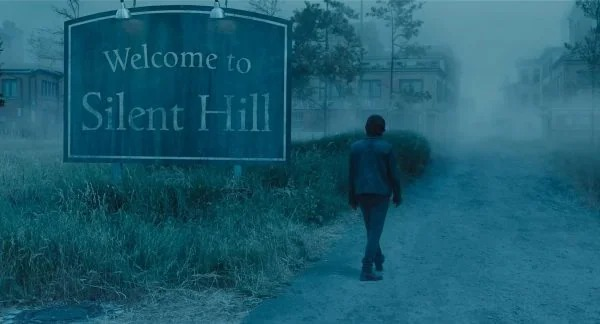


Return to Silent Hill presents itself as a cinematic return to the emotional core of the franchise, drawing heavily from Silent Hill 2, originally released in 2001. From the very first moments, the film understands something essential: atmosphere matters.
The opening act is genuinely strong. The pacing is patient, the tone is melancholic, and the visual language feels familiar. For a while, it really does feel like coming home. The fog, the silence, the weight in the air this is Silent Hill as fans remember it.
But then comes the moment every longtime fan quietly dreads: the director’s interpretation.
From Adaptation to Reinterpretation
Rather than strictly translating the game’s narrative, the film chooses to reinterpret it, placing a heavier emphasis on James Sunderland’s psychological state. On paper, that makes sense. Silent Hill 2 has always been about internal horror. The problem isn’t the focus on James’ psyche it’s how far the film drifts while doing so. The most drastic departure is Mary’s story.


The film attempts to fill in the blanks the game intentionally left open: Why Mary was sick, what kind of illness she had, what James and Mary’s life looked like before Silent Hill. These unanswered questions were never gaps in the original narrative they were deliberate absences, designed to let symbolism and guilt do the heavy lifting. By defining them so concretely, the movie trades ambiguity for explanation, and Silent Hill rarely benefits from being over-explained. These choices directly affect how the game’s version of enemies such as the nurses and bosses like Pyramid Head and Abstract Daddy are interpreted, and they ultimately take away more than they add to those same antagonists.
Characters as Echoes Rather Than Reflections
This adaptation is far more interested in James’ internal unraveling than in preserving the characters exactly as they existed in the game. That approach isn’t inherently wrong, but it creates friction for fans who know these characters deeply.


Angela’s storyline, in particular, is where this tension becomes most apparent. Her arc feels altered in a way that can initially feel uncomfortable or even wrong. And yet, instead of rejecting it outright, I found myself trying to understand why the director made those choices. I don’t agree with all of them, but I can see the intention. The film reframes Angela to fit its thematic priorities, even if that means losing some of the quiet, devastating subtlety that made her story resonate so strongly in the game.
Laura, too, feels changed less symbolic, more functional another example of how supporting characters are streamlined to serve the film’s forward momentum rather than its emotional depth.
A Movie That Chooses Momentum Over Dread
By removing interactivity from the game, puzzle-solving, and prolonged isolation, the film inevitably loses much of what made Silent Hill 2 oppressive. Instead of lingering dread, we often get movement: James running from one familiar location to the next, punctuated by flashbacks meant to contextualize his guilt and relationship with Mary.


Visually and sonically, the film still understands the franchise. The ash still falls (and no, it’s not snow, again!), the monsters retain their unsettling presence, and the sound design aided by series composer Akira Yamaoka does a lot of heavy lifting. There are moments where the imagery alone is enough to remind you why Silent Hill remains iconic.
But as a psychological horror experience, it never quite reaches the depth of its source.
Enjoyable, But Complicated
Despite all of this, I enjoyed the movie… I think


Not as a replacement for the game. Not as a definitive version of James and Mary’s story. But as a film.
Once I let go of the expectation that this needed to be Silent Hill 2, and instead engaged with it through ideas like the loop theory, the experience became more interesting. It’s clear that the film is also trying loosely to connect itself to the continuity of the earlier Silent Hill movies, even as it borrows heavily from the second game.
That creative middle ground is both its strength and its weakness.
Final Thoughts
In the end, Return to Silent Hill is not a bad movie. It’s not bad. It just isn’t the Silent Hill story I fell in love with. This isn’t the Silent Hill 2 we played. It’s a film based on it, shaped by a different medium and a different creative lens. I would say it focuses more on James and Mary’s relationship plot holes and then they took and filled them taking from the characters we know….. If you love the series, you should absolutely watch it. If you’re a die-hard fan who struggles when adaptations detach from established lore, parts of it will feel sour. The definitive psychological horror experience still lives where it always has back in the fog, with a controller in your hands.
Trailer:
4 responses to “Return to Silent Hill Review: Coming Home to the Fog, But Not to the Same Story”
Brutal voy a verla cuando salga en Puerto Rico me intereso
I Really feel so identified with this review. It wasn’t bad but yes it was kinda sour. I enjoyed it too!
Great Review! Im mad they skipped the two pyramid head scene and the toluca prison. But overall i enjoyed it as fan service
This Line- “I would say it focuses more on James and Mary’s relationship plot holes and then they took and filled them taking from the characters we know…..” that’s exactly how it felt. Still think it was great! It wasn’t better as the first one but still good.