
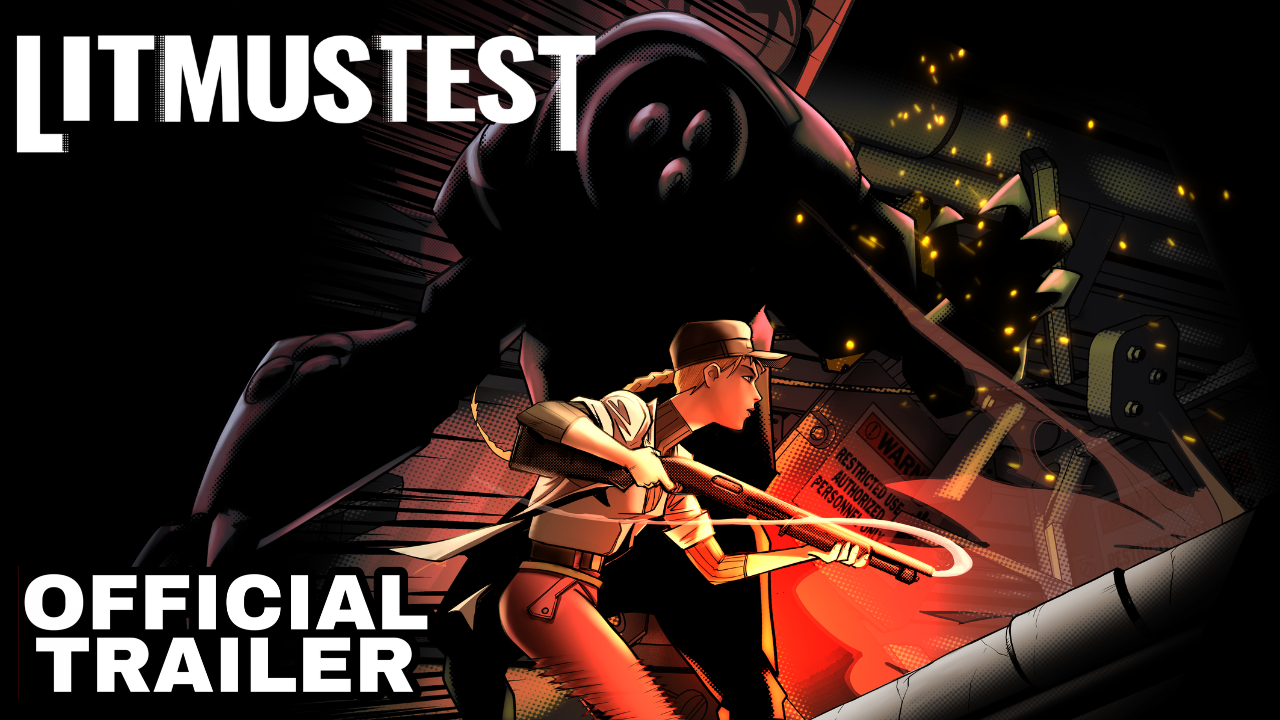
There is something incredibly satisfying about a horror game that understands the value of making you feel vulnerable. Before survival horror lost it’s way and became synonymous with elaborate set pieces, cinematic action, and mountains of ammunition, the genre was often about something much simpler: exploring an unsettling location, finding the right key, managing a painfully small inventory, and wondering whether the next room was going to contain an enemy or something much worse. Litmustest, the upcoming survival horror game from Underwater Castle Inc., looks like it wants to bring that philosophy back. And after getting the opportunity to play the demo early, I can say that this isn’t simply a game that looks and feels like classic survival horror.


Special thanks to Underwater Castle Inc. for providing us with an early demo and giving us the opportunity to experience Litmustest before its public demo launch. The free demo launches August 14 on Steam. and guys believe me when I tell you this one already got a place in The Vault!
A Secret Facility, a Missing Security Team, and Nowhere to Go
Litmustest puts players in the role of Nova Conti, a researcher working at Obyekt Grovnyca a highly classified research facility that apparently doesn’t exist on any public record. Nova is working a late shift when something goes horribly wrong. A colleague contacts her from somewhere deep inside the facility. He is trapped, security has gone completely silent, and then the communication suddenly ends. Then the exits lock. Nova is now trapped inside.


That setup immediately establishes the kind of isolated, claustrophobic environment that has historically worked so well for survival horror. There is no sprawling open world here. Instead, Litmustest builds its horror around the idea of being trapped somewhere you absolutely do not want to be. And after playing the demo, that feeling of vulnerability isn’t just part of the story. It is built directly into the gameplay.
Survival Horror Goes Back to Its Roots
One of the biggest reasons Litmustest caught my attention is that Underwater Castle Inc. isn’t hiding what inspired it. The game embraces fixed camera angles, tank controls, limited inventory management, environmental puzzles, exploration, and combat. And here’s the important part. It plays extremely well. The fixed camera and tank controls don’t feel like gimmicks or outdated mechanics that were added simply to make the game look retro. They work naturally with the environments and contribute directly to the tension.


Movement feels responsive, the camera placement works, and navigating the facility immediately brought me back to the golden era of survival horror. This is the kind of game where you enter a room and immediately start thinking about what you’re going to need to do next. Where was that door? Did I pick up the right item? Do I have enough ammunition? Can I afford to fight whatever is coming? Those questions are the foundation of classic survival horror, and the developer nailed setting the fire on those line of though.
Litmustest ‘s Map Feels Like the Golden Era
You remember opening the map every three steps to make sure you’re heading in the right direction? Miss that? Litmustest got you!

The facility itself is one of the things I enjoyed most about the demo. The map design feels old school and familiar, in the best possible way. You explore interconnected areas, discover locked doors, collect items, solve puzzles, and gradually begin understanding how the different sections of the facility connect. There is a deliberate sense of progression here. You’re not simply walking from one scripted horror sequence to another. You’re learning the facility. And that is something the best survival horror games have always done. The environment slowly becomes a puzzle in itself.

Eventually, you start remembering where things are, which doors you’ve opened, which areas you’ve already cleared, and most importantly which areas you probably shouldn’t be wandering into without being prepared.
In Litmustest, the Monster Doesn’t Play Fair and That’s a Good Thing
The monster mechanics are another area where Litmustest absolutely respects the hallmarks of survival horror. You have a choice. Fight or evade. And trust me when I say that you need to think carefully about which one you choose. Ammunition is very limited, and that’s exactly how it should be.
One of the biggest problems with modern horror games is that giving the player too much ammunition can completely destroy the fear factor. Once you know you can simply unload a magazine into every enemy, the monster stops being scary. Litmustest doesn’t make that mistake. You need to conserve your ammunition. You need to decide when an enemy is worth fighting. And sometimes the smartest thing you can do is simply get the hell out of there. The monster can also catch you off guard if you aren’t paying attention. Allowing yourself to get surrounded can quickly turn into an instant-death situation. That means gathering items and moving through certain areas isn’t something you can do casually.
You need to stay alert.
Inventory Management Is Brutal and I Loved It
If you’ve played classic survival horror, you already know that inventory management can be one of the most stressful mechanics in the entire genre. Litmustest embraces that philosophy completely. Your inventory space is limited, and you’ll constantly find yourself making decisions about what to carry, what to leave behind, and what might be more important later. The game also gives you a vault, allowing you to store additional items when you’re carrying too much.

This is a simple but extremely effective system. The storage gives you some breathing room without eliminating the pressure of limited inventory space.You’re still constantly thinking about what you actually need. And that is exactly what I want from a survival horror inventory system.
The Coffee Pod Save System Is a Fantastic Touch
One of my favorite details from the demo was the saving system. Litmustest uses coffee pods as part of its save mechanic, with players using them at a coffee pod maker to save their progress. As a Coffee Drinker. I absolutely loved this distinction. It gives the save system a little personality while still functioning within the classic survival horror philosophy of limited resources. Saving isn’t just something you do whenever you feel like it.

You need to think about when and where you’re going to use your resources. That creates another layer of decision-making without making the system unnecessarily complicated. It’s a small detail, but these are the kinds of mechanics that make a game feel thoughtfully designed.
Crafting Your Way Through the Nightmare
Litmustest also introduces crafting mechanics that fit naturally into the survival experience. Health items can be crafted depending on the materials you find throughout the facility. The different ingredients allow you to create weaker or stronger healing oils, meaning that exploration isn’t just about finding ammunition and keys.

You also need to pay attention to the resources you’re collecting. And then there’s gunpowder. Yes, you can gather gunpowder and use it to craft ammunition. That becomes incredibly important considering just how scarce ammo can be. The crafting system doesn’t feel like something bolted onto the game simply because modern games are expected to have crafting. It serves the survival mechanics. You’re scavenging because you need those resources.
Two Weapons, Two Very Different Situations
During my time with the demo, I had the opportunity to try two weapons: the Rifle and the Shotgun. The Rifle felt surprisingly similar to what you’d expect from a classic survival horror handgun. It is useful, dependable, and something you’ll want to conserve ammunition for rather than blindly firing at everything that moves.


Then there’s the Shotgun. The almighty shotgun. When you’re dealing with enemies at close range, this thing can absolutely save your ass. It can take enemies down in a single shot, but and this is a very important but ammunition is extremely scarce.


Do not waste your shotgun shells. Trust me. There are situations where having that shotgun available can mean the difference between getting through a crowded area alive and becoming monster food. When you’re low on health or surrounded, those shells suddenly become very, very valuable.
The Presentation Is Excellent
Another aspect of the demo that really stood out to me was the presentation. I particularly enjoyed how the different areas are framed on screen. The fixed camera isn’t simply there because the developers wanted to recreate a retro aesthetic. The camera is used to present the environments. Certain rooms have compositions that immediately create tension simply because of what the camera allows or doesn’t allow you to see.


It reminded me why fixed-camera survival horror worked so well in the first place. Sometimes the most frightening thing isn’t seeing the monster. It’s knowing that something could be just outside the frame.
This Is What Classic Survival Horror Should Feel Like
After playing the demo, what impressed me most about Litmustest is how consistently it sticks to the fundamental survival horror formula. Explore. Solve puzzles. Gather resources. Manage your inventory. Conserve ammunition. Decide when to fight. Know when to run at the end of the day Survive!


The game doesn’t appear interested in reinventing the genre. And honestly? It doesn’t need to. There is something refreshing about an indie developer taking a formula that worked incredibly well and understanding why it worked.
Litmustest doesn’t feel like a cheap nostalgia trip or another Clone. It feels like someone genuinely loves classic survival horror and wants to build a modern game around those principles.
The Demo Arrives August 14


The good news is that you won’t have to take my word for it. The free Litmustest demo launches August 14 on Steam, giving everyone the chance to step inside Obyekt Grovnyca and see whether this classic survival horror formula works for them.
Verdict: PUT THIS ON YOUR RADAR
Trailer:
Leave a Reply