A Personal Reflection on Gaming, Preservation, and the Things We Are Slowly Losing
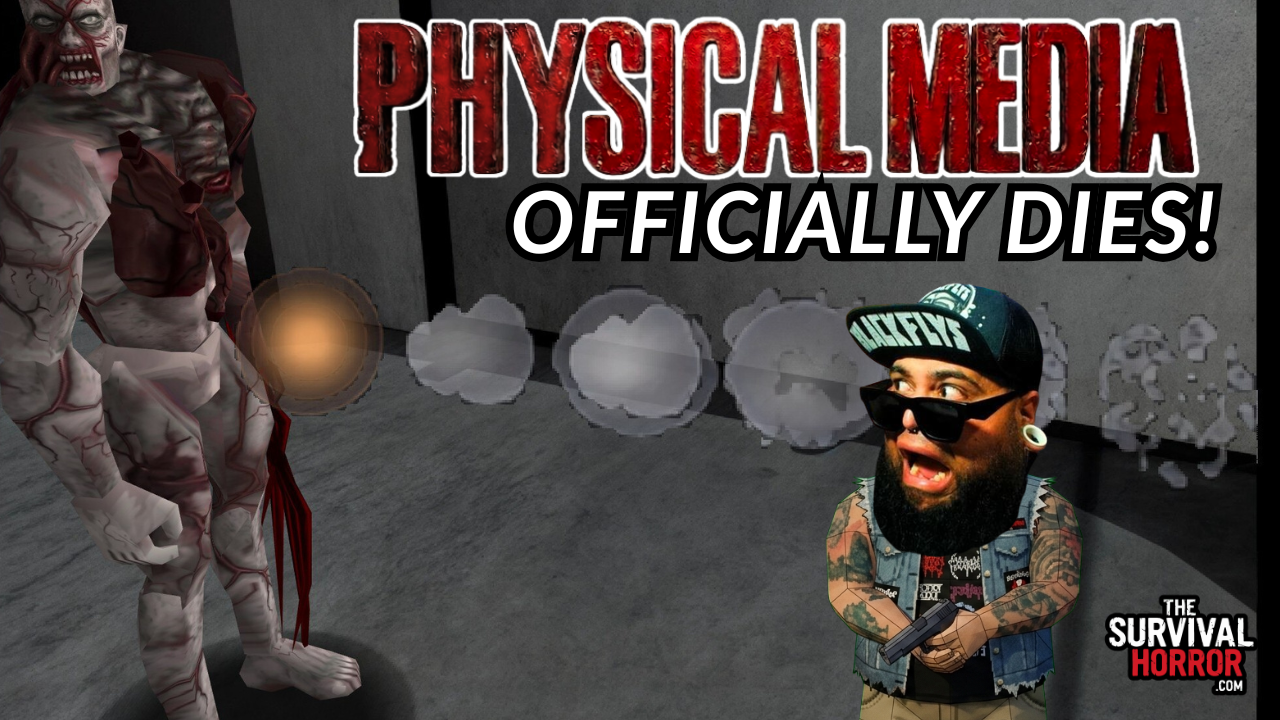
The recent announcement from Sony made something crystal clear to me: An era is slowly coming to an end. Physical Media is slowly dying and this time it’s touching videogames. When I first read the news, my mind didn’t immediately jump to PlayStation or the future of digital distribution. Instead, I found myself reflecting on my own journey as a gamer and how dramatically this hobby has changed over the last four decades.


This year I’ll turn 40. I’ve been fortunate enough to witness nearly every major transformation the gaming industry has experienced. I grew up during a time when video games were still discovering what they could become. I watched the industry evolve from the simplicity of Missile Command and Haunted House to the Nintendo Entertainment System, where games like Friday the 13th and A Nightmare on Elm Street sparked my love for horror. I experienced the leap into 3D with the original PlayStation and Nintendo 64, watched survival horror become its own genre, and saw gaming grow from a niche pastime into one of the world’s largest entertainment industries.
Progress has always been part of gaming. Better hardware, faster technology, online connectivity, and digital storefronts have all expanded what developers can create and how players experience games. I don’t believe progress is something to fear.
What concerns me is what we’re leaving behind. The conversation around physical media isn’t simply about discs, cartridges, or collector’s editions. It’s about ownership. It’s about preservation. Most importantly, it’s about the memories attached to the things we can hold in our hands.
I collect survival horror games, from household names to obscure titles that helped shape the genre long before it became mainstream. When I look at those shelves, I don’t see outdated technology. I see decades of creativity. Every game represents countless hours of work from artists, writers, programmers, composers, and designers who wanted to create something memorable.


Physical games carry a history that extends beyond the software itself. The cover art, manuals, packaging, and even the wear on the case tell stories. They remind us where we bought them, who introduced us to them, or who we shared them with. Those details may seem insignificant, but they’re part of the experience.
That’s something digital libraries struggle to recreate. Technology has always made life more convenient, but history shows that convenience often comes with trade offs. Every generation embraces something new while quietly letting something else disappear. Physical media is simply the latest example. For me, however, this discussion isn’t really about collecting. It’s about family.
My relationship with horror and video games began with my grandfather. He spent much of his life in New York and loved both horror films and video games long before either became the cultural giants they are today.
He introduced me to my first console, an Atari. Even then, the system was already considered old, but that never mattered. To me, it represented a discovery, I was excited about it! What is this sorcery! . It sparked a fascination that would eventually shape much of my life.


As gaming evolved, so did our shared experiences. We played through the NES era together, and later he watched me experience the leap into three-dimensional worlds. I still remember his reaction when he saw PlayStation games for the first time.
“They make me dizzy,” he laughed. “Games have changed too much.” Looking back, I understand exactly what he meant. Every generation reaches a point where technology begins to move faster than they’re comfortable with. Yet even after he stopped playing, he never stopped sharing the experience. He’d sit beside me, watch me play, ask questions, and enjoy seeing my excitement.
He also introduced me to horror movies. The first one we watched together was Friday the 13th Part VI. From then on, Friday nights became our tradition. We’d head to the Movie Rental and pick a horror movie to watch at home. Those evenings became some of my favorite childhood memories.


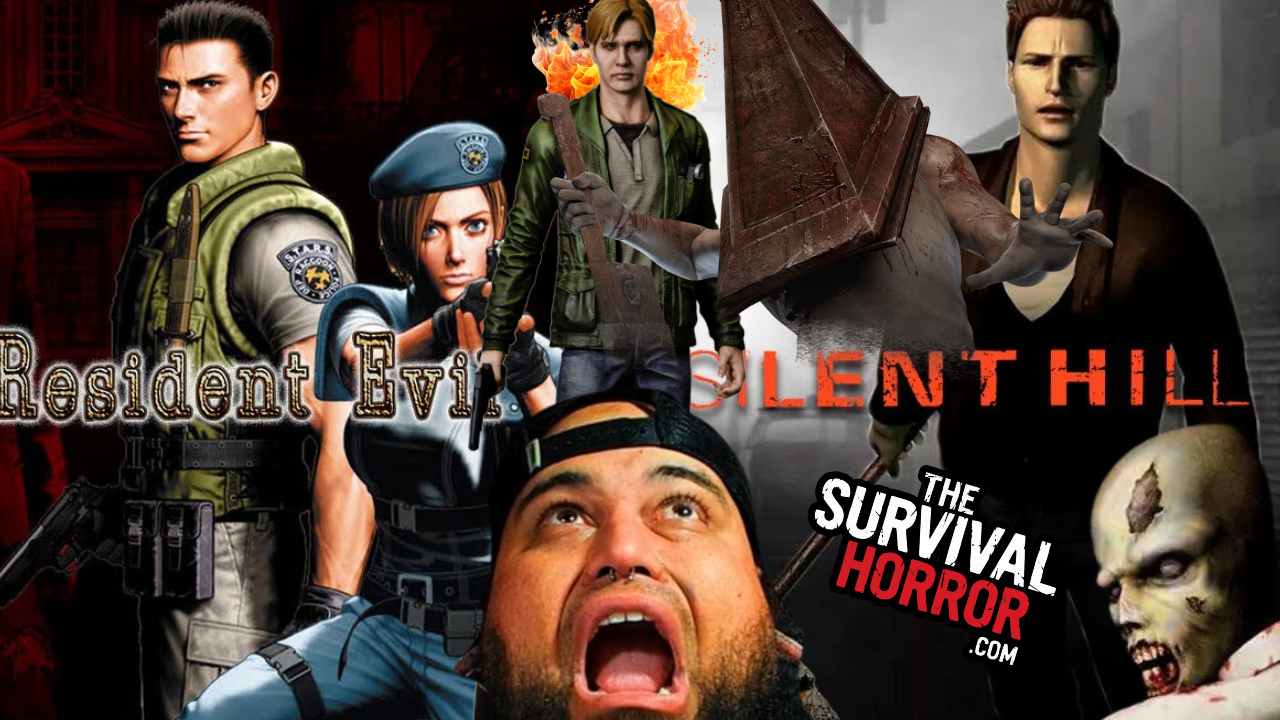
That’s why physical media means so much to me. When I pick up a game from my collection, I’m not just holding plastic and paper. I’m holding memories of my grandfather, of late nights discovering survival horror, of conversations with friends, and of moments that helped shape who I became. Still not convinced? I became a Biologist because of Resident Evil….I Know, right?
The value of physical media has never been measured by the material it’s made from. Its value comes from the human experiences attached to it. As the industry continues moving toward a digital only future, I can’t help but wonder if we’re slowly replacing ownership with access, permanence with convenience, and memories with subscriptions. Progress isn’t the problem. The challenge is making sure we don’t lose something irreplaceable along the way.
We’ve Seen This Before
Throughout history, every technological revolution has brought convenience while leaving something behind. The Industrial Revolution transformed manufacturing, transportation, and communication, creating opportunities previous generations could never imagine. But it also replaced entire trades, communities, and ways of life. You probably heard of this in a different way…..” Those machines took our jobs!”. Progress has always required adaptation, yet it has often come with the loss of traditions that once defined how people lived and worked. The shift toward digital ownership feels like another chapter in that same story.


The shift away from physical media isn’t unique to video games, we’ve already watched it happen with music and movies. As a lifelong metalhead, I still own my cassettes, CDs, and vinyl records. Buying an album used to be an experience. You didn’t just listen to the music; you studied the artwork, read the lyrics, learned who produced it, and appreciated the people behind every song. Then came digital downloads, Napster, followed by streaming, iTunes and now we are in the era of Spotify. Today we have access to millions of songs instantly, and that’s undeniably convenient. But somewhere along the way, music stopped being something many of us owned and became something we simply accessed through a subscription.


Movies followed the same path. Streaming services changed entertainment forever, giving us thousands of films at the click of a button. I remember the first time I saw Netflix, it was through a Nintendo Wii, it felt like I was living in the future. We’ve also watched movies and television shows disappear overnight because licenses expired or companies decided they were no longer profitable to keep available. The convenience is incredible, but it comes with a trade-off. We no longer own many of the things we love, we rent access to them.


Video games are now following that same road. From a business perspective, it makes perfect sense. Digital distribution eliminates manufacturing costs, shipping, inventory, and retail logistics while giving publishers greater control over their products. It’s efficient, profitable, and incredibly convenient for players. I’m not arguing that digital games shouldn’t exist. In fact, digital distribution has made gaming more accessible than ever before and has opened doors for independent developers that simply didn’t exist twenty years ago. The concern isn’t digital gaming itself; it’s the possibility of losing the ability to choose.
When you buy a physical game, you own something tangible. You can lend it to a friend, sell it years later, display it on a shelf, or pass it down to another generation. A digital purchase, however, is often nothing more than a license tied to an account, a storefront, or a company’s servers. That’s an important distinction. Physical games also created a thriving secondhand market that allowed families to buy games they otherwise couldn’t afford while giving collectors a way to preserve gaming history. They offered a sense of ownership that digital libraries simply can’t replicate.


Every game on my shelf tells a story. Some remind me of childhood, while others represent years spent hunting down obscure survival horror titles that many people have forgotten. Looking at that collection is like looking through a timeline of my life, and that’s one of the reasons I remain so passionate about classic survival horror.
People often dismiss fixed camera angles and tank controls as outdated, but I see them differently. Those mechanics weren’t accidents or technical limitations; they were deliberate artistic choices that shaped the experience. Fixed camera angles controlled what players could and couldn’t see, building suspense through uncertainty, while tank controls made movement deliberate, reinforcing vulnerability instead of empowerment. These games asked players to slow down. They rewarded observation, patience, and exploration instead of constantly pushing them toward the next objective. Every hallway mattered, every locked door created anticipation, and every resource forced meaningful decisions.


Modern games can be extraordinary, but speed has become the default. Bigger worlds, faster movement, constant objectives, and endless content often leave little room for quiet tension. Classic survival horror reminds us that sometimes less creates more, and that idea extends beyond gameplay. We often dismiss older games simply because they’re different from modern design philosophies, but different doesn’t mean inferior. We don’t dismiss black and white films because color exists, nor do we consider traditional painting obsolete because digital art has become popular. Games deserve that same respect. Art evolves, but evolution shouldn’t erase what came before.


That’s why preservation matters so much to me. One recent example is Silent Hill: The Short Message. Whether someone enjoys the game is ultimately a matter of personal taste. Some players criticized it, while others appreciated its willingness to explore difficult subjects such as bullying, trauma, and suicide prevention. As someone who has long believed that games can create meaningful conversations and even help people through difficult moments, I believe projects like this deserve to be preserved. Games aren’t just products, they’re cultural artifacts that reflect the ideas and concerns of their time.


The announcement that Silent Hill: The Short Message would receive a physical release reminded me why companies dedicated to preservation remain so important. It also reminded me of Silent Hill P.T., one of the clearest examples of the dangers of an all-digital future. What began as a free teaser became one of the most influential horror experiences ever created, yet because it only existed digitally, millions of players lost the opportunity to experience it after it was removed. Its legacy survives through videos, discussions, and memories, but the game itself became inaccessible for many. We can’t covered the sun with one finger, We wouldn’t have Resident Evil VII without P.T. and If something as influential as P.T. can disappear, it’s worth asking what other games may eventually suffer the same fate.


That’s why preservation isn’t about nostalgia. It’s about ensuring that future generations can experience the history that shaped this medium rather than simply reading about it.
More Than Plastic
When I look at my collection today, I don’t see expensive collectibles or shelves full of plastic cases. I see my grandfather introducing me to horror, those Friday nights at the movies, and the games that terrified, challenged, and inspired me throughout my life. I see the evolution of an entire medium and the countless developers, artists, writers, composers, and designers whose work shaped not only the gaming industry but also my own journey as a player.
That’s what physical media represents to me. It’s more than a collection of discs and cartridges, it’s a connection between creators and players, a record of gaming history, and proof that these experiences existed and mattered. The conversation surrounding physical media has never really been about the format itself. It’s about our relationship with art and the memories we attach to it. That’s why I’ve created The Vault, a comprehensive curated Archive of survival Horror Games honoring the legacy of each artist.


Over the years, we’ve gradually replaced things we could own with things we simply access. Albums became playlists, movie collections became streaming libraries, and shelves full of games became digital storefronts. None of these changes are inherently bad. Technology has made entertainment more accessible than ever before, allowing independent developers to reach audiences around the world while giving players instant access to thousands of titles. Services like GOG have also shown that digital preservation can be done responsibly.
The issue isn’t digital gaming itself, it’s the possibility that digital becomes the only option. Choice matters. Some players value convenience, while others value ownership and preservation. Those preferences shouldn’t be mutually exclusive. There should be room for both because each offers something valuable to the people who enjoy this hobby in different ways.
That idea extends beyond physical media and into another conversation that’s reshaping every creative industry: artificial intelligence.
The Last Frontier : Human Creativity
Like every major technological advancement before it, AI brings both exciting possibilities and legitimate concerns. It can help creators organize ideas, automate repetitive tasks, and overcome technical barriers, making the creative process more efficient. Used responsibly, it’s another tool in an artist’s toolbox.

But a tool should never replace the artist…
Art has never been valuable simply because of the finished product. A painting isn’t meaningful because paint exists on a canvas. A song isn’t memorable because sound waves were recorded. A game isn’t important simply because code runs successfully on a console. They matter because another human being created them.
Behind every game is someone who spent years solving problems, refining ideas, making mistakes, and pouring pieces of themselves into their work. Those struggles, imperfections, and personal experiences are often what make art resonate with us in the first place. Technology should help creators express themselves more effectively, not make creativity itself optional.


When we prioritize efficiency above everything else, we risk forgetting why art exists. It isn’t a race to produce as much content as possible. Art exists to express ideas, tell stories, preserve emotions, and create connections between people. That’s the thread connecting every topic in this article: physical media, game preservation, classic survival horror, and human creativity. They all lead to the same question: What are we willing to lose in the name of convenience?
Progress is inevitable, and I don’t believe we should resist it. Every generation has embraced new technology, and gaming has benefited enormously because of those innovations. But progress shouldn’t require us to abandon everything that came before. Not everything old is obsolete. Sometimes it’s simply different, and those older design philosophies, physical collections, and traditional creative processes continue to offer something modern alternatives cannot.
Before we dismiss physical media as outdated, perhaps we should ask what it preserves beyond the game itself. Before we call a classic mechanic obsolete because it isn’t modern, perhaps we should ask what experience its creators were trying to deliver. And before we allow convenience to replace ownership entirely, perhaps we should consider what future generations will inherit when everything exists only as a license tied to a server.
History has shown us, time and time again, that we often don’t recognize the value of something until it’s gone.


Maybe this article will make me sound like an older gamer who’s simply nostalgic for the past. If that’s the conclusion some people reach, that’s okay. Every generation eventually reflects on what has changed. The important thing isn’t rejecting the future, it’s making sure we don’t lose the pieces of our past that made the future worth building.
For me, those pieces are found in survival horror, in shelves filled with games that still tell stories decades later, and in the memories they continue to carry. Art is more than entertainment. It’s history. It’s a memory. It’s humanity. And those are things worth preserving.
I hope you can understand why all these topics were mixed together in this piece. Because they all come from the same place! We are losing everything that made art valuable… We are losing humanity , we are losing creativity and finally we are losing ourselves for the sake of productivity and accessibility. Ill close this though with a question, If we take away creativity, Are we even alive? Let that sink in.
Follow me for more content on Socials :
I am El Joe!
Watch Interviews with Devs on YouTube
Related Articles: