
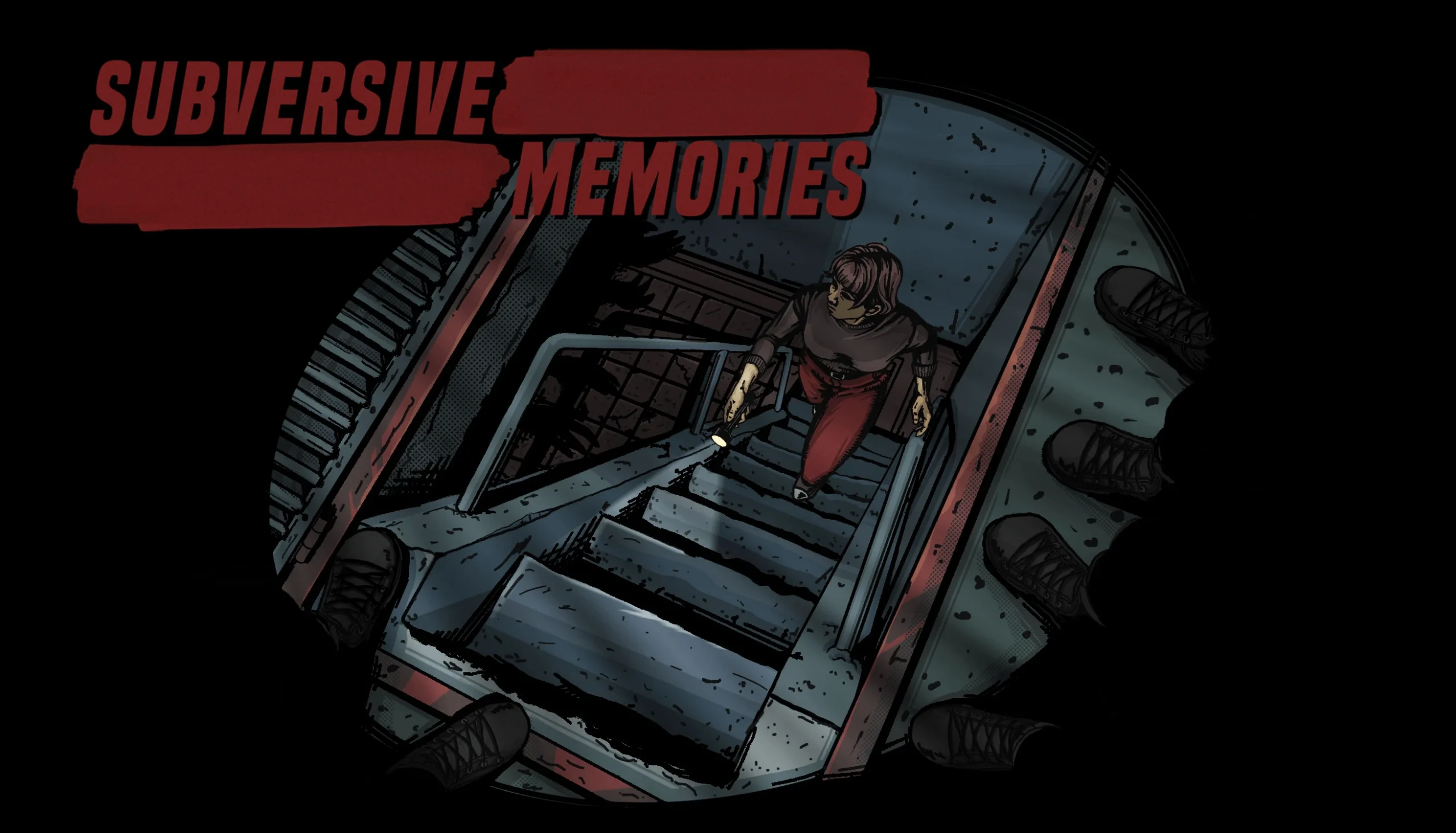
There is a particular kind of horror that lingers long after the credits roll. Not because of monsters or jump scares, but because it taps into something real something historical, painful, and deeply human. Subversive Memories is one of those experiences.


It opens with a bold and unforgettable declaration: “This is not a fictional story.” From that moment, Subversive Memories immediately commands your attention. It follows with the stark reminder, “There’s a Place Called Brazil,” grounding its horrors in a very real place and history. And then comes the line that seals the deal: “There is no God.” It’s a chilling, provocative opening one that instantly hooks you and makes it clear that this is not just another horror game, but an experience unafraid to confront uncomfortable truths.


Developed by Southward Studio, this striking indie title blends classic survival horror design with a politically charged narrative rooted in one of Brazil’s darkest chapters. The result is a game that feels both familiar and refreshingly distinct: a love letter to late-1990s survival horror, but one with something urgent and meaningful to say.
A Haunting Journey Through Brazil’s Past
You play as Renata, a woman driven by a lifelong sense of absence an emptiness tied to unanswered questions about her past. Her search for truth leads her to an abandoned military research facility, a place filled with secrets, shadows, and the lingering scars of authoritarian violence. Inspired by the real horrors of Brazil’s military dictatorship, Subversive Memories explores themes of oppression, censorship, trauma, and remembrance. It is not merely using history as window dressing. The game is deeply invested in examining how political violence leaves wounds that persist across generations. Through environmental storytelling, notes, and symbolism, it builds a narrative that is both intimate and unsettling.
Old School Survival Horror, Reimagined


Mechanically, Subversive Memories wears its influences proudly. The 2D design fits the genre perfectly. Fans of early Resident Evil will immediately recognize its design philosophy. The game revolves around interconnected environments, locked doors, carefully placed shortcuts, and a methodical pace that rewards observation and planning. Its facility is brilliantly designed, with rooms looping back into one another in satisfying ways. There is a constant sense of spatial awareness, the kind that made classics like the Spencer Mansion so memorable. Every newly unlocked passage feels meaningful, turning previously intimidating spaces into familiar territory at least until the game decides otherwise.
Navigation can occasionally be tricky, particularly when doorways blend into the edges of the screen. Thankfully, the map system is excellent, clearly marking explored rooms, locked passages, and points of interest. In a genre built on exploration and backtracking, a well-designed map is not just helpful it is essential.
Puzzles That Respect the Player


One of the game’s greatest strengths is its refusal to overexplain itself. There are no glowing markers, no highlighted objects, and certainly no yellow paint pointing the way. Instead, Subversive Memories trusts players to pay attention.
Clues are hidden in documents, environmental details, the classic Map and subtle visual cues. Some puzzles require connecting information discovered hours earlier, rewarding careful note-taking and genuine engagement. They can be challenging, sometimes surprisingly so, but that difficulty makes each solution feel earned.


That classic “aha!” moment the one survival horror fans know so well is alive and well here.
Light as a Weapon
Combat is sparse but tense. Rather than relying on conventional firearms, Renata uses a specialized dual-drive flashlight to fend off hostile entities. It is an inspired mechanic that feels both thematically appropriate and mechanically effective.
There is a catch, of course: power is limited. Every use drains the flashlight’s battery, forcing you to think carefully about when confrontation is truly necessary. Do you stand your ground, or conserve resources and flee?


Often, running is the smarter choice. Enemies can be avoided by careful movement, environmental awareness, and a bit of nerve. This creates the kind of vulnerability that defines great survival horror not empowerment, but survival.
A Slow Burn That Builds to Panic
The early hours focus heavily on atmosphere, exploration, and narrative setup. Encounters are relatively infrequent, allowing tension to simmer rather than boil over. This measured pacing works in the game’s favor, giving players time to absorb the setting and its many unsettling details. Imagine Playing a Resident Evil inspired game in a 2D fashion with a heavy psychological theme like Silent Hill with a very good pacing on escalation and revelations. It’s a great story but let’s not forget there is a major difference because this game was also influenced by real events with a very unique approach.


By the final act, however, that simmer becomes a full blown panic. Enemy encounters increase dramatically, safe routes become dangerous, and familiar corridors suddenly feel hostile. The once manageable facility transforms into a labyrinth of desperation. It is a thrilling escalation, capturing the frantic energy of classic survival horror finales where escape feels uncertain and every decision matters.
Style with Substance
Visually, Subversive Memories is immediately captivating. Its retro inspired presentation combines low poly 3D environments with pixelated textures and fixed camera perspectives, evoking the aesthetics of the original PlayStation era while maintaining a modern sense of atmosphere. The result is both nostalgic and uniquely stylish. More importantly, its visual design serves its themes. The decaying military complex feels oppressive and haunted, as if history itself is embedded in its walls.
Replayability and Multiple Endings
Though a single playthrough typically lasts around two to four hours, I Finished it in 3 hours 10 minutes the first time. Subversive Memories encourages repeat visits. Multiple endings await those willing to dig deeper, solve optional puzzles, and uncover every hidden secret.
This replayability feels organic rather than forced. The game rewards curiosity, thoroughness, and a willingness to engage fully with its mysteries.
Final Verdict – Highly Recommended
Subversive Memories is an impressive achievement an intelligent, atmospheric survival horror experience that understands exactly what made the genre special in the first place. More importantly, it uses those familiar mechanics to tell a story that feels personal, political, and profoundly relevant.


It is tense, thoughtful, and unapologetically old school, while also offering a perspective rarely explored in horror games. For fans of classic survival horror, this is an easy recommendation. For anyone interested in games that use horror to confront real historical trauma, it is essential Sometimes the scariest ghosts are the ones history refuses to forget.
You can learn more or pick it up on Steam here: Subversive Memories on Steam
Trailer: