
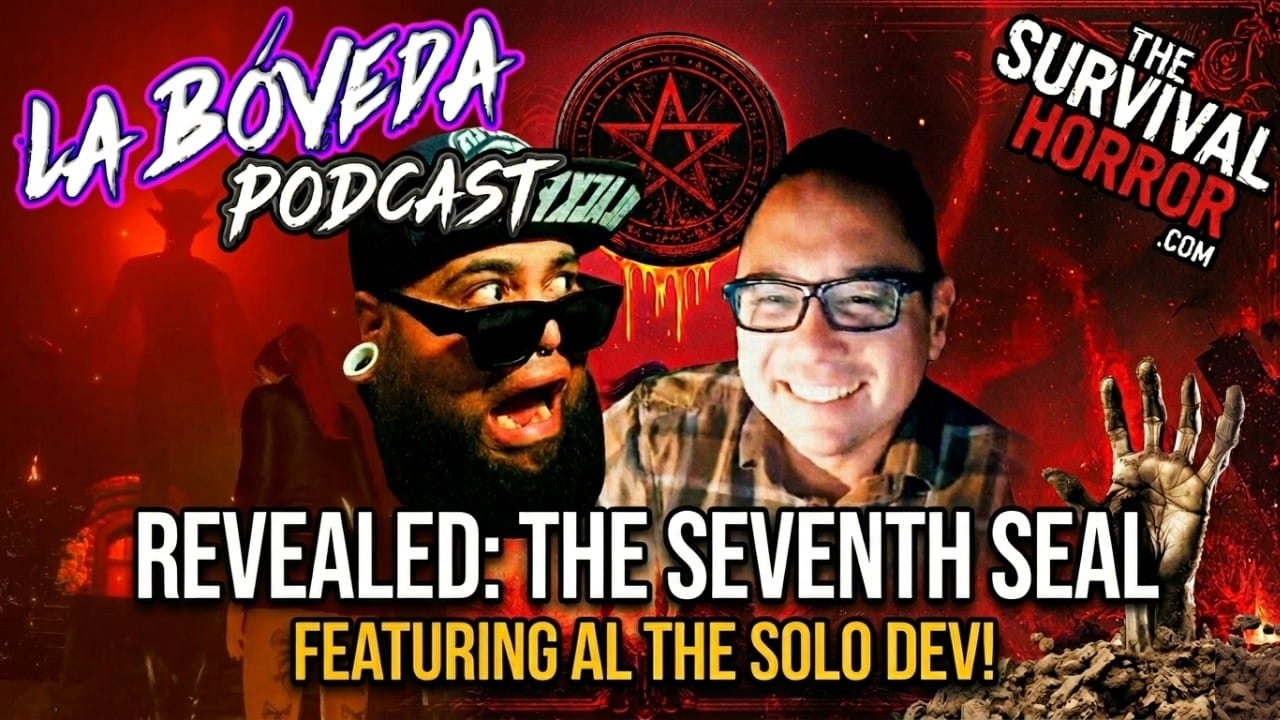
Survival horror has always thrived on uncertainty. Whether it’s the fear of limited resources, the dread of the unknown, or the psychological weight of isolation, the genre continues to evolve by pushing players into situations where survival feels fragile and reality itself becomes unstable. Seventh Seal is one of the latest indie projects exploring exactly that space blending apocalyptic horror, psychological tension, and a deeply unsettling sense of religious and existential dread.

Set within a sealed environment where something has gone terribly wrong, Seventh Seal follows a protagonist forced to navigate collapsing systems, hostile encounters, and cryptic environmental storytelling that raises more questions than answers. Is the threat biological? Supernatural? Or something far more symbolic?
Rather than offering clear explanations, the game leans into ambiguity. Its horror comes not just from what players see, but from what they are forced to interpret. Combined with survival mechanics, puzzle-solving, and a heavy focus on atmosphere, Seventh Seal aims to create an experience that feels oppressive, introspective, and constantly on edge.

But beyond its in-game horror, Seventh Seal is also part of a larger conversation happening in modern game development particularly around the role of artificial intelligence in indie production. In today’s landscape, where creative tools are rapidly evolving, the boundaries between traditional development and AI assisted creation are becoming increasingly debated.
In this episode of La Bóveda, we sit down with Al, the developer behind Seventh Seal, to explore the inspirations behind the game, its approach to survival horror design, and the themes that shape its world. We also discuss the use of AI in game development, transparency in creative processes, and why this topic has become such a dividing line within the indie scene.
The conversation dives into horror design philosophy, environmental storytelling, emotional tone, and what it means to create fear in a world where the tools of creation are changing faster than ever.
For fans of psychological horror, apocalyptic settings, and survival horror experiences that lean into ambiguity and atmosphere, this is a conversation worth exploring.
Interview:
Trailer:
Get it :